
What Are The Ideal Classroom Doors For Schools?
Classroom doors in educational buildings are more than just passageways; they are critical components for security, acoustic performance, hygiene, durability, and long-lasting use. Especially in elementary, middle, and high school projects, door selection must consider multiple technical factors such as student traffic, impact resistance, fire safety, and maintenance costs. This guide covers the essential technical features, regulatory compliance, and project-specific selection criteria for school classroom doors in detail.
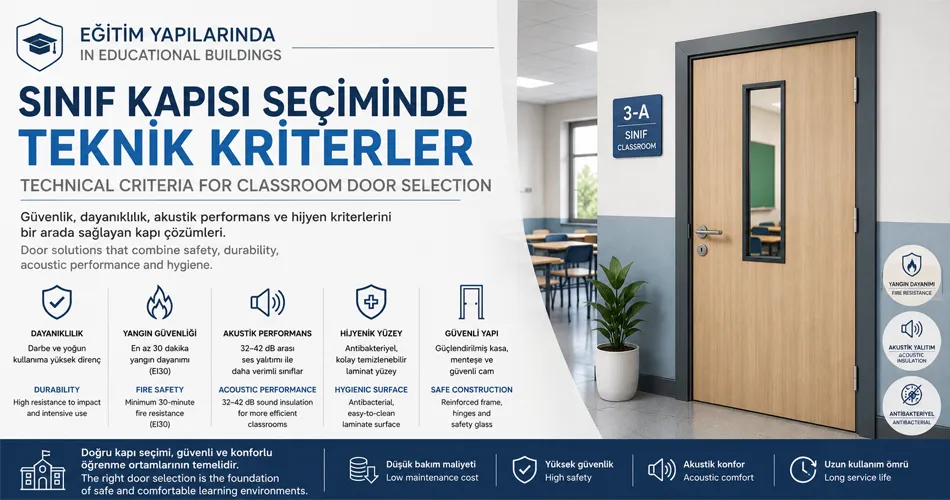
Technical Criteria for Selecting Classroom Doors in Educational Buildings
Doors used in schools differ significantly from residential interior doors due to heavy use, sudden impacts, high circulation, and security requirements.
Impact Resistance and Durability for Heavy Use
Classroom doors open and close hundreds of times daily. Therefore, it is recommended to have:
- High-density MDF or compact laminate surface
- Impact-absorbing edge banding
- Reinforced hinge systems
- Surface coating thickness of at least 8–10 mm
Laminated surfaces, in particular, offer greater scratch resistance and maintain aesthetic appeal over time.
Fire Resistance and Safety
Fire resistance is often a mandatory requirement in Ministry of Education projects and public tenders. Key features include:
- Minimum 30-minute fire resistance rating (EI30)
- Smoke-sealing gasket systems
- Fire-resistant glass options
- Panic bar compatibility (when required)
Fire performance depends not only on the door leaf material but also on the frame and installation system.
Acoustic Performance
Sound insulation is critical for effective learning environments inside classrooms. Without proper noise control, the educational setting is negatively affected.
- Sound insulation between 32–42 dB
- Bottom sweep threshold systems
- Filled core construction
These are recommended technical solutions. Acoustic performance is especially important in exam rooms and special education classrooms.
Hygiene and Easy Maintenance
Schools are high-contact environments. Therefore, doors should feature:
- Antibacterial surfaces
- Resistance to chemical cleaning agents
- Stain-resistant coatings
Laminated surface doors offer advantages in cleaning and reduce maintenance costs.
Frame System and Installation Details
Two frame systems are commonly preferred in school projects:
- Steel frame system (high durability)
- Aluminum frame system (long lifespan and modern appearance)
Improper installation can compromise door performance. The frame size must match the wall thickness accurately.
Safe Use of Glass in Doors
Some classroom doors include observation glass, which should be:
- Tempered or laminated
- Shatter-resistant upon breakage
- Safe for student use without risk
The glass area is usually limited to the upper section of the door.
Common Mistakes in Door Selection for School Projects
- Using residential-type doors
- Ignoring acoustic requirements
- Choosing products without fire certification
- Using low-quality hinges
- Leaving gaps after installation
These errors lead to increased costs and safety risks over time.
Expert Evaluation
When selecting classroom doors for educational buildings, focusing solely on price is not advisable. Durability, certification, lifespan, and maintenance costs must be evaluated together. Compliance with technical specifications is especially crucial in public projects.
Choosing the right product results in:
- Lower maintenance expenses
- Enhanced safety levels
- Improved acoustic comfort
- Long-term performance
Frequently Asked Questions
Which door surface is more durable for schools?
Laminated doors offer better resistance to scratches and impacts.
Is a fire-resistant classroom door mandatory?
It depends on the project and specifications. Public buildings typically require a specified fire resistance duration.
Are classroom doors with glass safe?
They are safe as long as tempered or laminated glass is used.
Classroom doors in schools should be selected by considering security, durability, acoustic performance, and hygiene together. Choosing products without project-specific analysis can result in additional costs and performance loss over time. Therefore, certified, technically detailed, and heavy-use suitable systems should be preferred.
To explore specially designed models for classroom doors and educational buildings, visit the related category page:
Explore various frame types and durable laminate surface options for educational buildings in the school door models page.
What Are the Ideal Classroom Doors for Schools? - Sık Sorulan Sorular
İlgili Ürünler
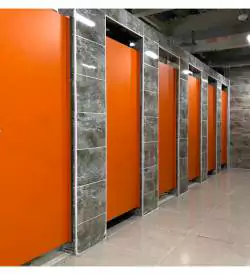
Compact Laminate Wc Doors

Laminate Frame And Double Leaf Hospital Doors

Aluminum Frame Laminated Door with Steel Reinforcement
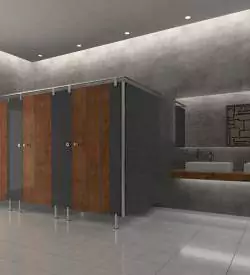
Compact Laminate Wc Doors And Partitions

Double Leaf Laminate Hospital Doors

Single Color Laminate Locker With Two Doors

Square Oval Interior Door Handle

Ado 100 Teak Composite School Classroom Door with Glass Window

4 Doors Compact Laminate Locker

Ado 500 Anthracite Composite Classroom Door with Glass
- Blog Comments