
Technical Specifications Of Steel Door Usage In Fire Exit Doors
Fire exit doors play a critical role in ensuring life safety during emergencies. In particular, the use of steel doors is one of the fundamental elements that enhance the durability and functionality of fire doors. Steel doors meet fire safety standards and offer a regulation-compliant structure due to their resistance to high heat and mechanical impacts. The material quality, design features, and regulatory compliance of steel doors during fire door usage are important for fire exit doors to perform their function flawlessly. In this technical content, the role, features, durability, and advantages of steel doors in fire exit doors will be examined in detail, providing a comprehensive evaluation in connection with fire door materials and regulatory requirements. Thus, reliable and technically accurate information will be provided for professionals and technical authorities working in the field of fire safety.
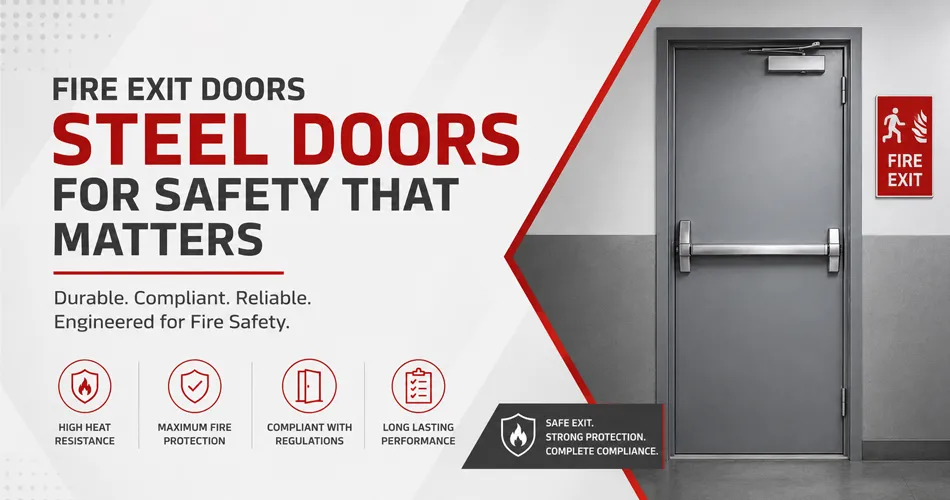
Fire exit doors are designed to ensure safe evacuation of buildings during a fire. The material and structural features of these doors are critically important for fire safety. The use of steel doors increases the durability of fire doors, helping to prevent the spread of fire and allowing users to safely exit the building. Therefore, the technical specifications of steel doors and their compliance with fire door regulations are evaluated in terms of the effectiveness of fire exit doors.
During fire door usage, the characteristics, material quality, and manufacturing standards of steel doors determine the door's performance against fire effects. The high heat resistance and mechanical strength of steel doors increase the reliability of emergency exit doors. This article will technically address the role, advantages, and regulatory compliance of steel doors in fire exit doors.
Use of Steel Doors in Fire Exit Doors
Fire Door Features and the Role of Steel Doors
Fire doors are specially designed to prevent the spread of fire and ensure the safe evacuation of occupants inside the building. Key features of these doors include heat resistance, smoke tightness, and mechanical durability. Steel doors play a critical role in providing these features. Due to their metal structure, they resist deformation under high heat and prevent fire from spreading to other sections.
The fire door properties of steel doors are directly related to the thickness of the steel used, the door's insulation materials, and manufacturing techniques. These doors are typically made from galvanized steel and filled internally with fire-resistant insulation materials. Thus, steel doors provide both a physical barrier and heat insulation during a fire.
Durability of Steel Doors and Fire Safety
Steel doors offer high durability in terms of fire safety. Their metal structure resists the high temperatures generated by fire, while the mechanical strength of the door ensures it remains functional during emergencies. The durability of steel doors directly affects their operability and the duration they remain closed during a fire.
Within the scope of fire safety, the durability of steel doors is tested by evaluating their resistance time to heat and structural integrity. These tests determine whether the door complies with fire door regulations. The high durability of steel doors is a significant factor that enhances life safety during a fire.
Fire Door Regulations and Steel Door Materials
Fire door regulations specify the materials to be used in the production of fire exit doors and the technical specifications of the doors. Steel doors must be manufactured in accordance with the standards outlined in these regulations. The regulations detail criteria such as steel thickness, coating materials, heat resistance, and sealing properties.
Materials used in fire doors include steel, insulation filling materials, hinges, and locking systems. The quality of materials used in steel door production directly affects the performance of the fire door. Regulations guarantee the fire resistance of these materials and the functionality of the door.
Advantages and Technical Performance of Steel Doors
Steel doors have many technical advantages that make them a preferred choice for fire exit doors. Primarily, steel doors prevent the spread of fire due to their high heat resistance. Additionally, their metal structure ensures long service life and mechanical robustness. These doors are also practical in terms of maintenance and repair.
From a technical performance perspective, steel doors provide the necessary mechanical strength for opening and closing during a fire. Furthermore, the surface of steel doors resists wear and impacts that may occur during fire door usage. These advantages support the widespread use of steel doors in fire safety applications.
Functionality of Steel Doors in Emergency Exit Doors
Emergency exit doors are designed for quick and safe evacuation during fire and other emergencies. Steel doors are an important element that enhances the functionality of these doors. Their metal structure increases the door's reliability and durability, while compliance with fire door regulations guarantees the door's functionality.
The installation and locking systems of steel doors ensure the emergency exit door opens quickly and is easy to use. Additionally, the surfaces of steel doors resist deformation that may occur during fire door use. These features increase the effectiveness of emergency exit doors.
Fire Door Usage and Maintenance Requirements for Steel Doors
Regular maintenance and inspection of steel doors during fire door usage are important to sustain the door's performance. Hinges, locks, and coating surfaces of steel doors should be checked periodically to detect any possible deformations or wear. This ensures the door's functionality is preserved during a fire.
Maintenance requirements are determined in accordance with fire safety standards and regulations. Procedures such as surface cleaning and lubrication of mechanical parts increase the durability and service life of the door. Regular maintenance prevents malfunctions that may arise during fire door usage.
The use of steel doors in fire exit doors provides significant technical and material advantages in terms of fire safety. The durability, regulatory compliance, and technical performance of steel doors play a critical role in ensuring life safety during emergencies. Therefore, the features and advantages of steel doors should be carefully evaluated when selecting fire doors.
Use of Steel Doors in Fire Exit Doors - Sık Sorulan Sorular
Why are steel doors so important for fire safety?
Steel doors offer high heat resistance and mechanical strength in terms of fire safety. Thanks to their metal structures, they prevent the spread of fire and facilitate emergency evacuation. Additionally, their compliance with fire door regulations enhances their effectiveness. Therefore, steel doors play a critical role in fire safety applications.
What are the advantages of using steel doors in fire exit doors?
There are many advantages to using steel doors in fire exit doors. Primarily, their high heat resistance prevents the spread of fire. They are also long-lasting and mechanically robust. Furthermore, they are practical in terms of maintenance and repair, providing significant convenience for users.
How is the compliance of steel doors with fire door regulations evaluated?
The compliance of steel doors with fire door regulations is assessed based on criteria such as door thickness, coating materials, and heat resistance. These criteria are established according to fire safety standards and are important factors affecting the performance of the steel door during a fire.
How should the maintenance of steel doors be performed in fire door usage?
Regular maintenance of steel doors in fire door usage is critically important. Hinges, locks, and surface coatings should be inspected at regular intervals. Additionally, surface cleaning and lubrication of mechanical parts increase the door's durability and prevent potential malfunctions.
What characteristics should the insulation materials of steel doors have?
The insulation materials of steel doors should be highly heat resistant and capable of preventing heat transfer during a fire. These materials, located inside the door, create both a physical barrier and provide heat insulation during a fire. High-quality insulation enhances the door's performance.
How is the functionality of steel doors ensured in emergency exit doors?
The functionality of steel doors in emergency exit doors is ensured through robust hinge and lock systems. These systems guarantee quick opening and ease of use. Moreover, the surfaces of steel doors are resistant to deformation during a fire, which further increases safety.
Which materials should be considered when using fire doors?
The materials to pay attention to when using fire doors include steel, insulation filling materials, hinges, and lock systems. The quality of these materials affects the door's performance during a fire. Fire doors must be manufactured to guarantee the durability and functionality of these materials.
How is the durability of steel doors tested during a fire?
The durability of steel doors during a fire is tested by their resistance duration to heat and the structural integrity of the door. These tests determine whether the door complies with fire door regulations. High durability is an important factor that enhances life safety during a fire.
İlgili Ürünler
Astonished Pattern Ready Made Cnc Door Window Frame

Arma Glass and Slatted Apartment Steel Door

Modern Teak Fire-Rated Hotel Door Compatible with Card Access Systems

Natural Modern White Fire-Rated Hotel Door

Gray Sonoma Card Lock Compatible Fire-Rated Hotel Door
Kazbegi Oak Kick-Resistant Laminate Hospital Door
Este Novita Card Reading Hotel Door Lock

Akça Oak 30-Minute Fire-Resistant Hotel Door

Avangard Rondo Hotel Lock with Card Reading

Alya Fire-Resistant Hotel Room Door
- Blog Comments