
Technical Specifications And Advantages Of Fire-Resistant Doors
Fire-resistant doors are specially designed products developed to ensure the safety of buildings during a fire. These doors prevent the spread of fire, facilitating evacuation processes and increasing life safety. Fire door features are evaluated based on technical criteria such as material quality, durability period, and compliance with standards. Among the advantages of fire doors are the control of fire through fire safety doors and the minimization of material losses. These doors are manufactured and tested in accordance with specified fire door standards and regulations. Fire-resistant door prices vary depending on the type of materials used and the duration of resistance. Fire door materials generally consist of high heat-resistant metals, special insulation materials, and fire-resistant seals. Fire door regulations detail the technical specifications, installation conditions, and testing procedures of the doors, ensuring safety is guaranteed. This article comprehensively covers the technical specifications, advantages, and standards of fire-resistant doors.
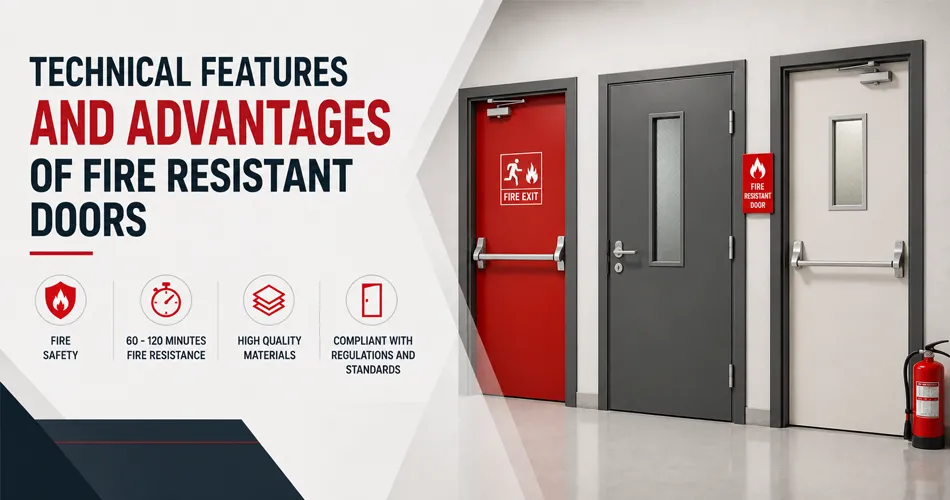
Fire-resistant doors are one of the most critical components of building fire safety systems. These doors are specially designed to prevent the spread of fire and must have specific fire resistance durations. The correct door selection during a fire is of great importance both to prevent loss of life and to reduce material damage. Therefore, it is necessary to know the technical specifications of fire-resistant doors and to prefer products that comply with standards.
Fire door regulations and standards establish the rules that must be followed throughout the entire process from production to installation. These standards ensure the reliability of doors by testing their performance. Additionally, fire door prices vary depending on factors such as material quality and resistance duration. Investments in the field of fire safety doors increase the safety of buildings in the long term while ensuring compliance with legal obligations.
Features of Fire-Resistant Doors
Fire Door Standards and Regulations
Fire-resistant doors are produced in accordance with national and international standards. These standards define the fire resistance durations, material properties, and performance criteria of the doors. In Turkey, the fire door regulation governs the testing and certification processes of doors within the relevant legislation. This regulation mandates that the door maintains its structural integrity and heat insulation during a fire.
Standards specify the fire resistance of the door in minutes; for example, 60, 90, or 120-minute resistance durations are commonly used. The regulation also covers the installation, maintenance, and usage conditions of the doors. These rules are applied to enhance the effectiveness of fire doors and increase the level of safety.
Fire Door Materials
The materials of fire-resistant doors must be heat-resistant and long-lasting. Metals such as steel and aluminum are generally preferred. These metals provide structural durability during a fire and prevent deformation of the door. Special filling materials that provide fire insulation are used inside the door.
Among fire door materials, mineral wool, ceramic fibers, and intumescent seals hold significant importance. Mineral wool creates a barrier that does not transmit heat, while intumescent seals expand under heat to fill the gaps between the door and the frame. This prevents the passage of smoke and flames. Material selection directly affects the fire resistance duration of the door.
Fire Door Features and Technical Details
Fire-resistant doors must not only resist heat but also be smoke-tight. This feature prevents the spread of toxic gases during a fire and increases the safety of evacuation routes. The hinges, locks, and closing mechanisms of the doors are also made from materials resistant to high temperatures.
Technically, the surfaces of fire doors are usually coated with heat-resistant paints. These paints provide an aesthetic appearance and enable the door to withstand long durations. The door’s opening direction, ease of opening, and emergency exit functions are also among the criteria specified in the regulations. Thus, fast and safe evacuation is ensured during a fire.
Advantages of Fire Doors
Fire-resistant doors increase life and property safety by preventing the spread of fire. These doors isolate the fire zone and protect other areas. Additionally, the advantages of fire doors include minimizing damage caused by fire and facilitating evacuation processes.
Fire doors are an important part of building security systems and reduce fire insurance costs. Correctly selected and standards-compliant fire doors ensure compliance with fire regulations and help fulfill legal obligations. These advantages offer significant benefits for building owners and users.
Fire-Resistant Door Prices
Fire-resistant door prices vary according to the door’s resistance duration, material quality, and dimensions. Certified products that comply with standards generally have higher costs but provide long-term safety. Installation and accessories also play an important role in pricing.
Although there are fire doors available in different segments on the market, the technical specifications and compliance with standards of affordable products must be carefully checked. Fire door prices should be considered as an investment cost and prioritized in terms of safety. Quality materials and appropriate resistance durations are decisive factors affecting the price.
Fire Safety Doors and Application Areas
Fire-resistant doors have a wide range of applications from residential buildings to commercial structures, industrial facilities, and public buildings. They are especially preferred in emergency exit routes, stairwells, and fire zone boundaries. Fire safety doors control the fire in these areas and enhance evacuation safety.
The technical specifications and resistance duration of the door may vary depending on the application area. For example, doors with longer resistance are used in high-risk industrial facilities, while standard durations may be sufficient for office buildings. Therefore, the selection of fire safety doors should be made according to the intended use and regulations.
Fire-resistant doors are an indispensable part of building fire safety systems. Their technical specifications, material quality, and compliance with standards play a critical role in ensuring life and property safety during a fire. Correct fire door selection and installation prevent the spread of fire, facilitate evacuation processes, and ensure legal requirements are met. Therefore, fire door features and regulatory compliance must be carefully evaluated.
İlgili Ürünler

Akça Oak 30-Minute Fire-Resistant Hotel Door

Alya Fire-Resistant Hotel Room Door

Montana 30-Minute Fire-Resistant Hotel Door

Bells Of Ireland Metal-Framed and Kick Plate Laminated Door

Crieff Oak Colored Aluminum Frame Laminated Office Door
Compact Laminate Wc Doors

Ado 3122 Office Type Composite Door

Ado 3201 Office Type Wooden Membrane Door

Laminate Frame And Double Leaf Hospital Doors

Compact Laminate Wc Doors And Partitions
- Blog Comments